
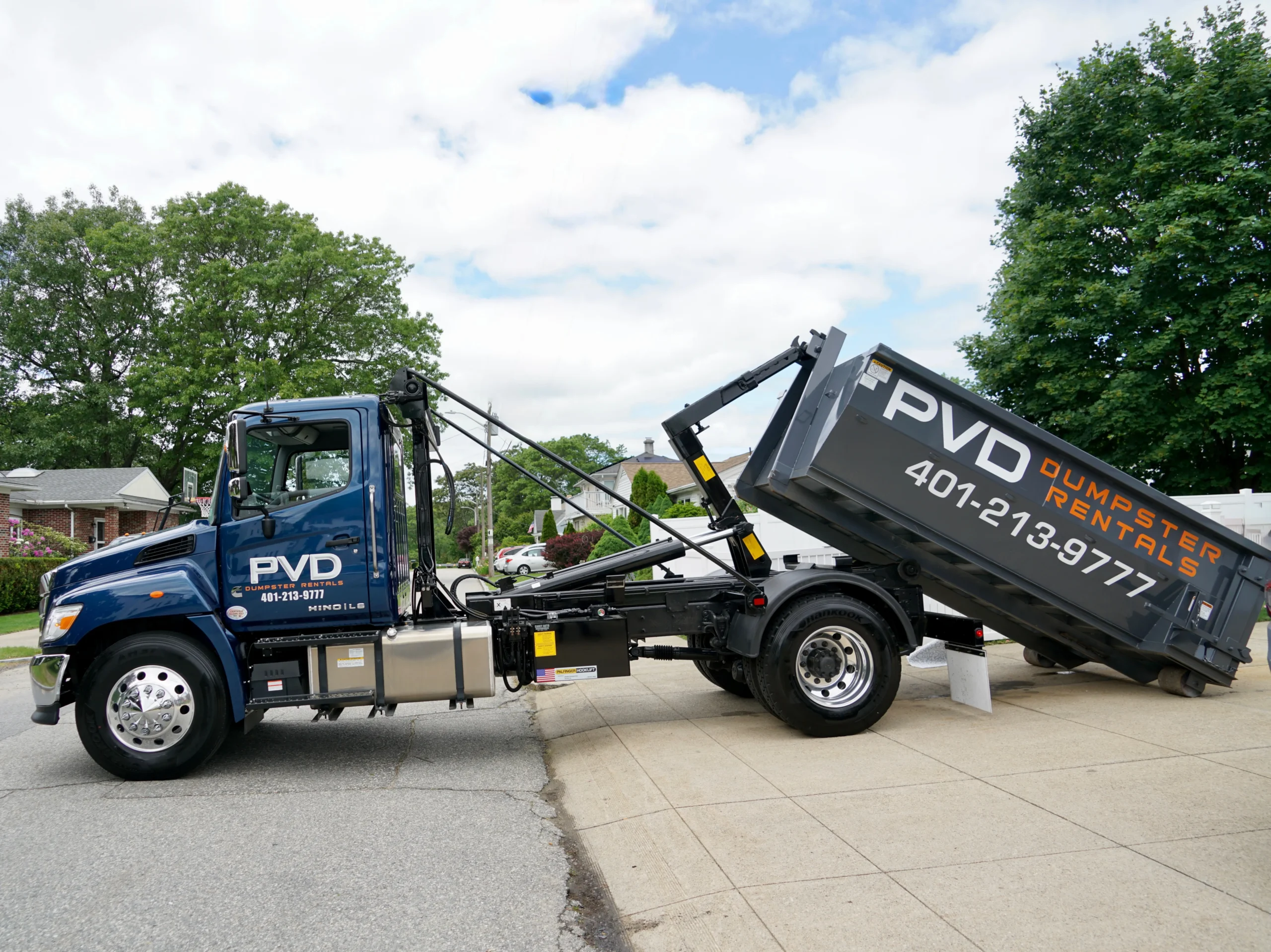
Dumpster Rental Specs Dumpster Sizes and Weight Limits PVD Dumpster Rentals
Dumpster rental comes down to two numbers: how much room the container gives you and how much weight it is allowed to carry. Every dimension, tonnage and material rule we run on is on this page.
The Line-Up
Dumpster Sizes and Weight Limits, Side by Side
Dimensions tell you if it fits the driveway. Tons tell you if it fits the job. Most people need both before they book.
-
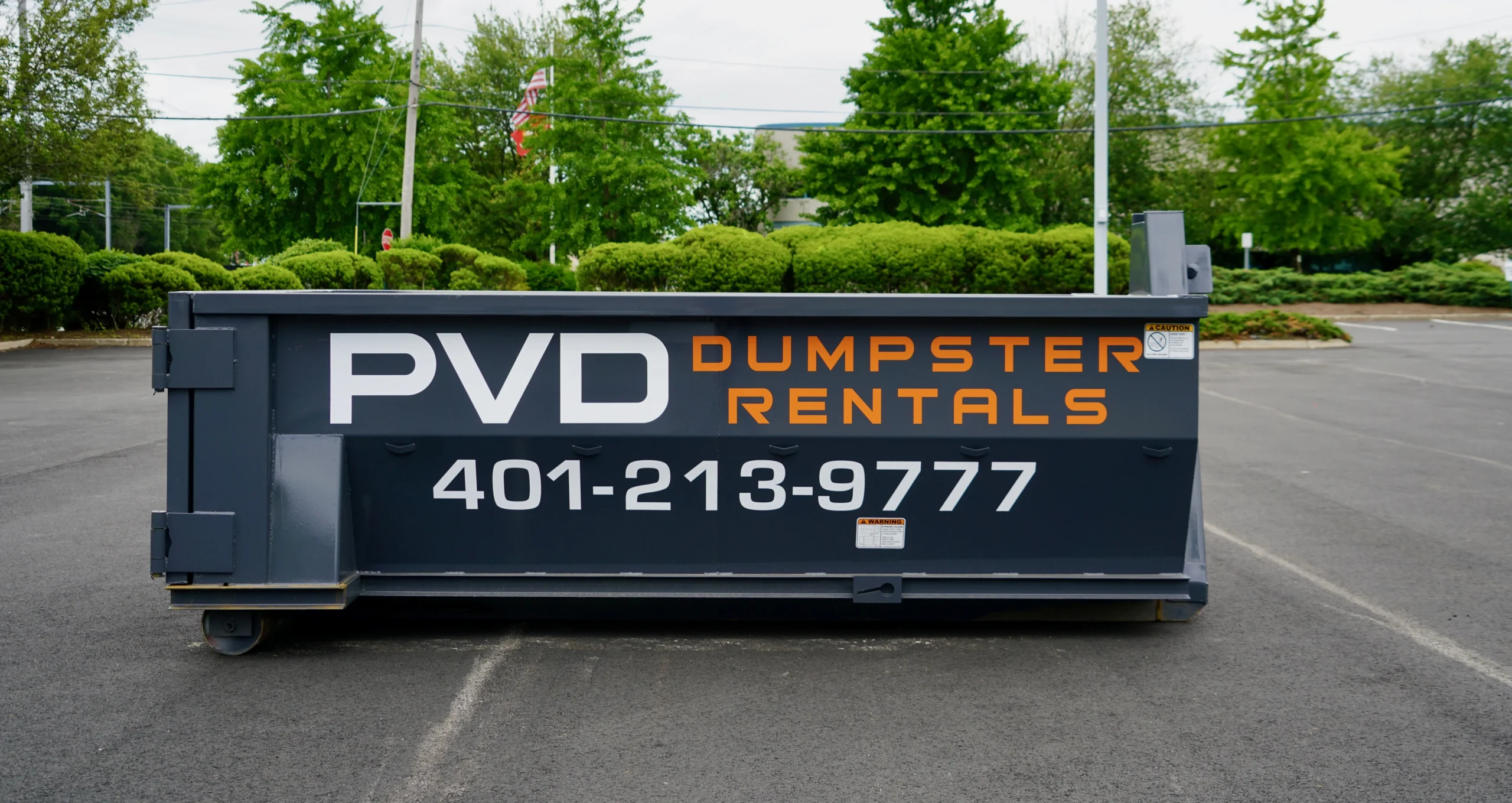
10 Yard Dumpster
12′ x 8′ x 3′Bathroom strip-out or one room
1 ton included
Book a 10 Yard 10 Yard Details -
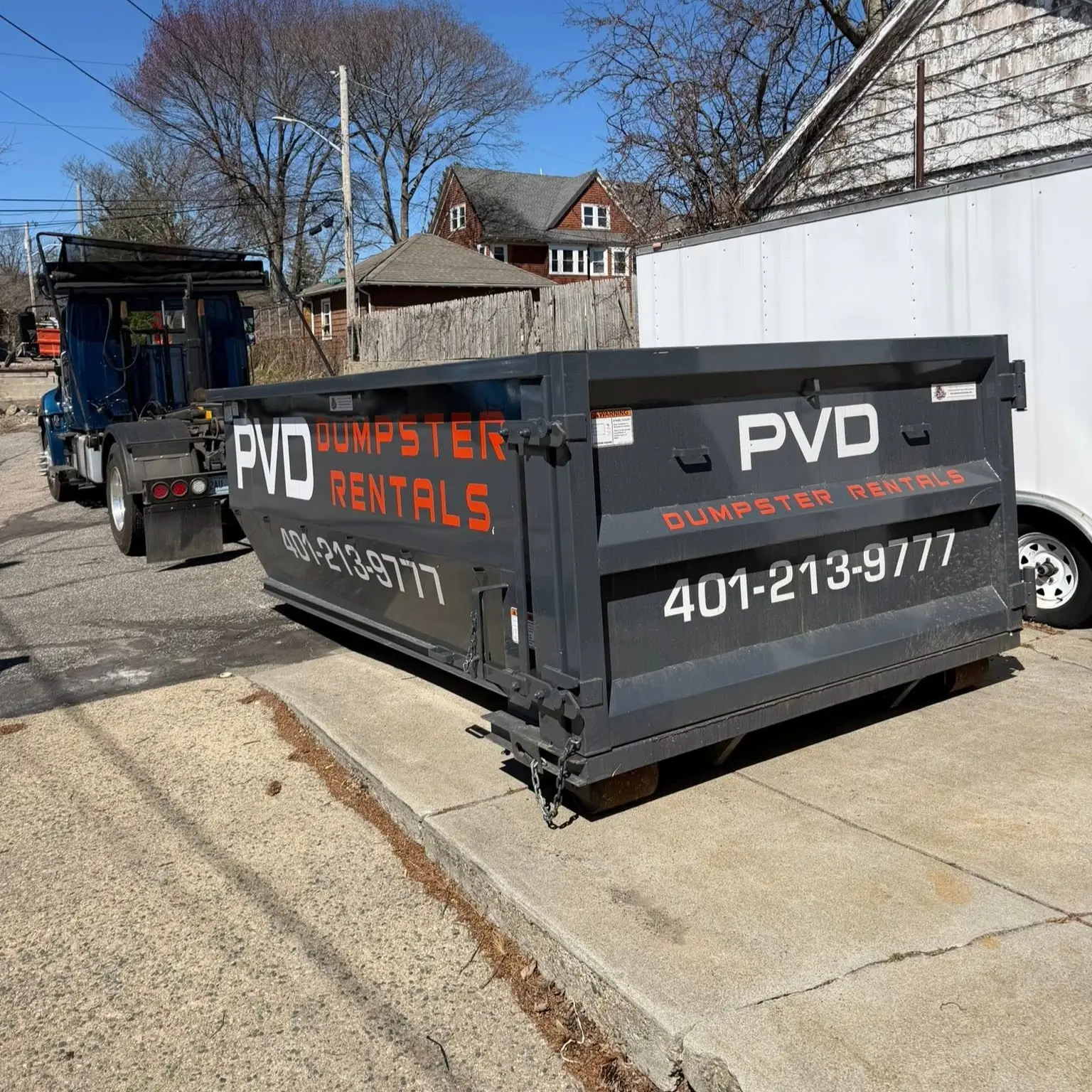
15 Yard Dumpster
14′ x 8′ x 4′Two-car garage or a kitchen
1.5 tons included
Book a 15 Yard 15 Yard Details -
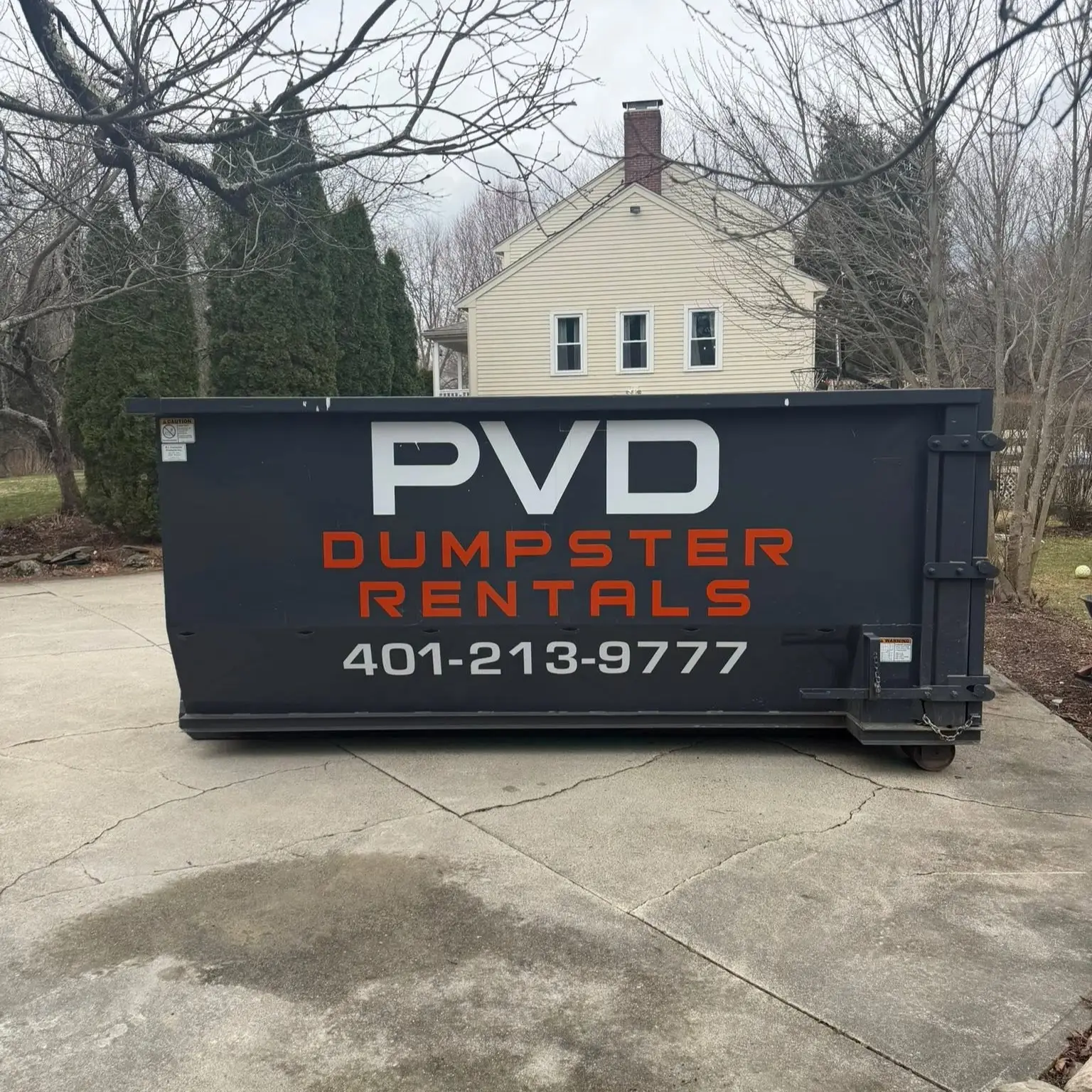
20 Yard Dumpster
14′ x 8′ x 5′Tear-off or a whole floor
2 tons included
Book a 20 Yard 20 Yard Details -
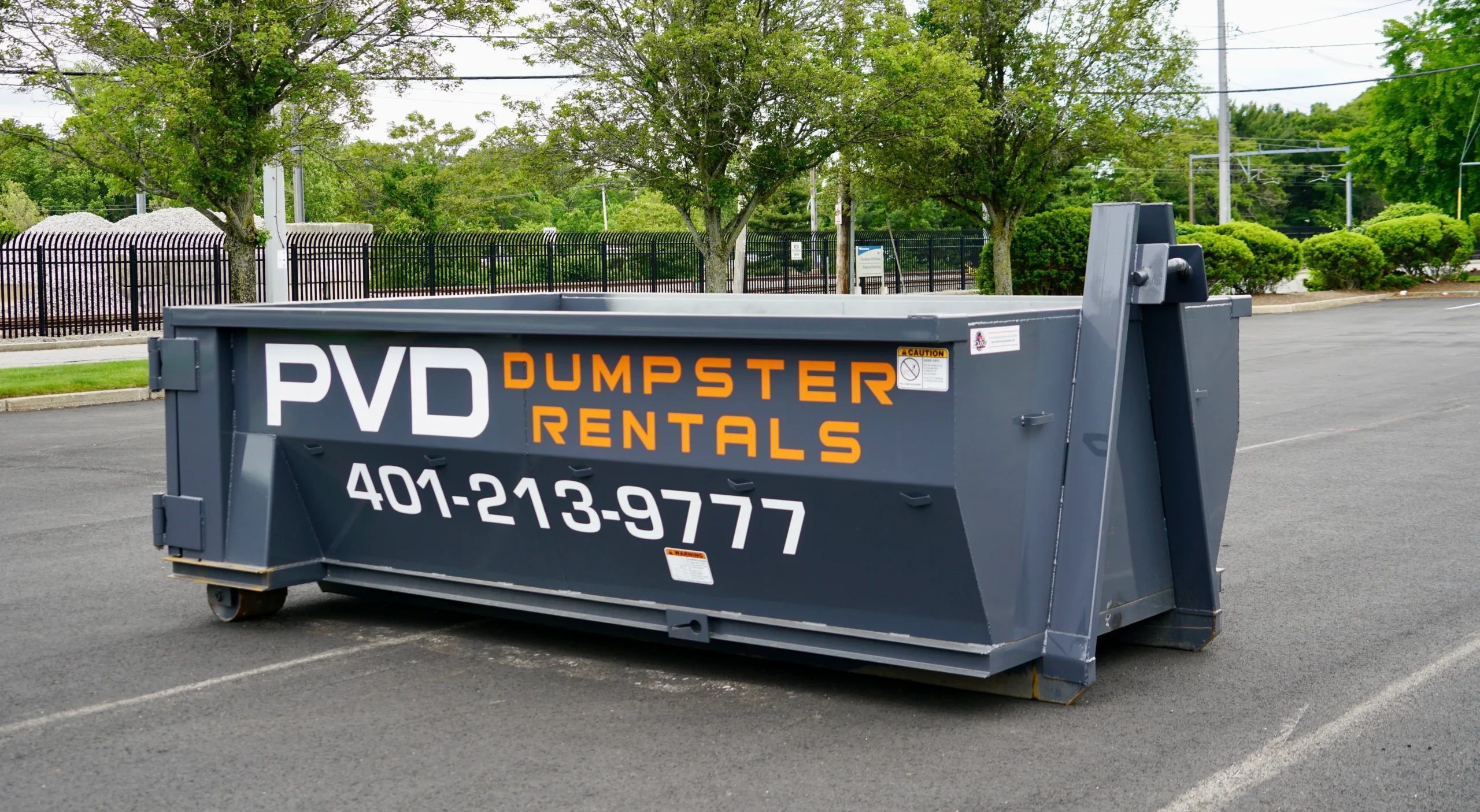
Concrete Dumpster
12′ x 8′ x 3′Masonry and block, nothing mixed
3 tons included
Book Concrete Concrete Details -
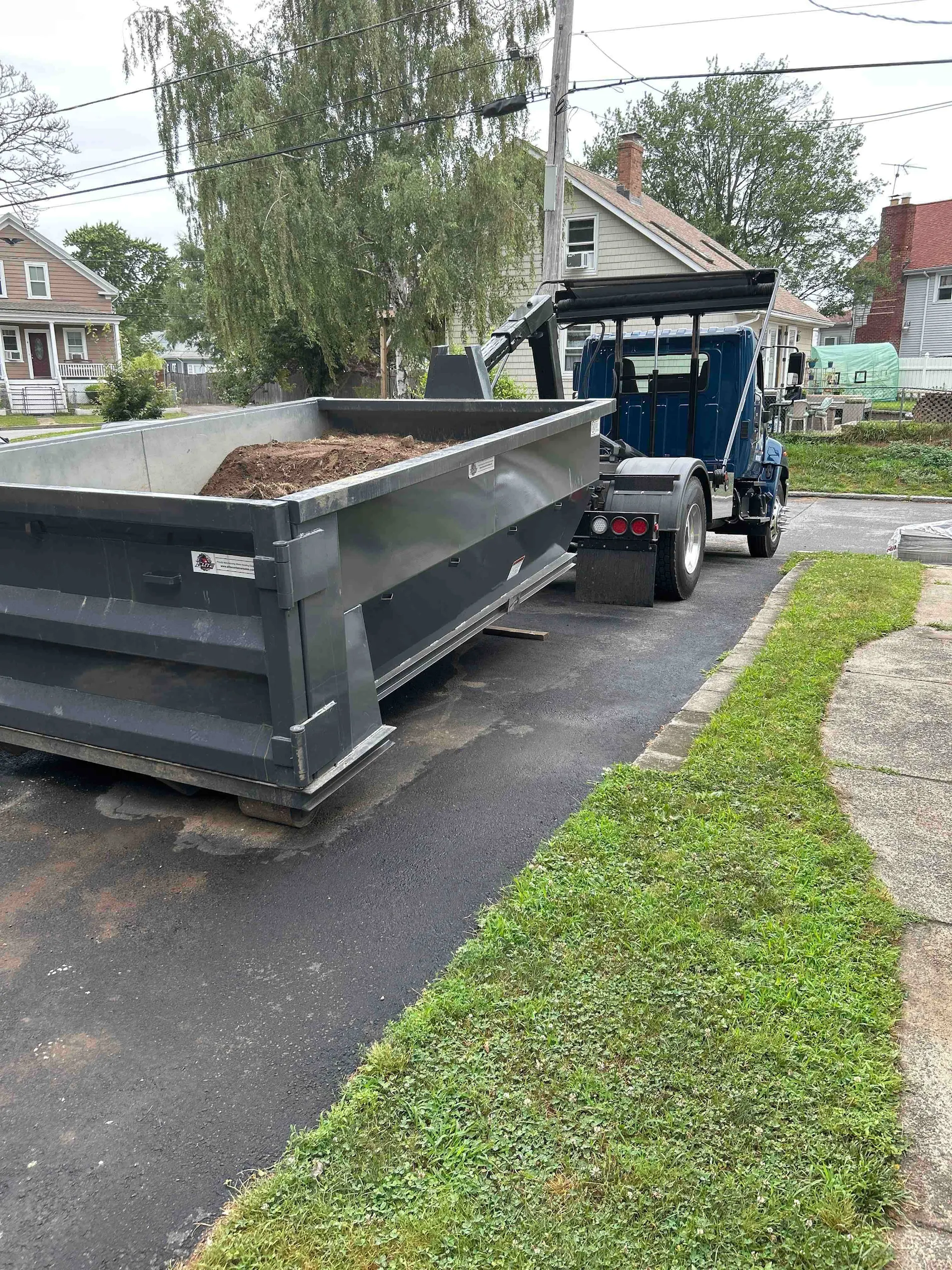
| Size | Dimensions | Tons included | Cubic yards | What it fits |
|---|---|---|---|---|
| 10 yard dumpster | 12′ L x 8′ W x 3′ H | 1 ton | 10 | About three pickup loads of light waste |
| 15 yard dumpster | 14′ L x 8′ W x 4′ H | 1.5 tons | 15 | Four to five pickup loads, or one full room strip |
| 20 yard dumpster | 14′ L x 8′ W x 5′ H | 2 tons | 20 | Six to seven pickup loads, or a single-layer tear-off |
| Concrete dumpster | 12′ L x 8′ W x 3′ H | 3 tons | 10 | Masonry with nothing else mixed through it |
| Dirt dumpster | 12′ L x 8′ W x 3′ H | 3 tons | 10 | Excavated soil, turf and landscaping stone |
Those three cover almost everything a home or jobsite produces. We do not run a 30 yard or a 40 yard, so for a job larger than a 20 yard holds we swap an empty container for your full one instead. Dense material is a different question and needs the dedicated concrete and dirt container rather than a bigger box. For what each size costs, see dumpster rental prices in Rhode Island.
Rental options
Accepted Materials
What You Can Put in a PVD Dumpster
Most of what comes out of a house or a jobsite goes straight in. A short list needs a heads-up so we can plan the container, and a shorter list is refused at the disposal facility no matter who hauls it.
We Accept
- Household and estate contentsSofas, bed frames, dressers, boxes, clothing, carpet and padding.
- Wood, drywall and framing scrapStuds, sheathing, trim, subfloor, doors, cabinets and countertops.
- Asphalt shingles and roofing feltSingle or multi-layer tear-off. Heavy for the room it takes, so size for weight.
- Brush, branches and green wasteStorm debris, hedge trimmings and general yard clearing.
Never accepted
- Asbestos in any formSiding, pipe wrap, floor tile, insulation. No quantity is small enough.
- Liquid paint, oil and fuelFully hardened latex paint is a separate question, so ask before loading.
- Chemicals, solvents and batteriesPesticides, pool treatment, adhesives and anything corrosive.
- Medical and biological wasteTurned away at the gate by every facility in the state.
Call before you load it
-
Mattresses and box springs $100 each per item
Accepted. Count them at booking and the item charge is written into your agreement, not discovered once the box has been weighed.
Say it at booking -
Propane tanks $35 each per item
Accepted, though they must stay visible. Leave them standing next to the box and flag them for the driver on collection.
Never loose -
Tires $12 starting, per tire
Taken individually rather than by the load, and the charge starts there and climbs with the diameter. Give us a number when you book.
Price varies by size -
Concrete, dirt, sod, brick and asphalt 3 tons included, 3 days rental
Heavy material travels in its own container and cannot be mixed into a general debris load. Book the dedicated concrete and dirt container instead.
Different container
Holding something you are unsure about? Call (401) 213-9777 before it goes in. One question beats a refused load and a wasted day. More detail sits in what fits in each dumpster size.
The Weight Math
How to Estimate a Load Before the Scale Does
Every standard allowance is 200 pounds per cubic yard
Divide the included tonnage by the container volume and the same number comes back every time. A 10 yard allows 1 ton across 10 cubic yards. A 15 allows 1.5 tons across 15. A 20 allows 2 tons across 20. All three work out to 200 pounds for each cubic yard of space you are given.
That ratio is the whole story. Household contents and bagged trash sit near or below 200, so a standard container filled with them reaches its walls before it reaches its allowance. Jobsite waste sits well above 200, so the same container reaches its allowance first. The allowance was never sized for construction density, which is why a builder who fills a box to the rail is over and a homeowner who does the same is not.
Run the heavy material container through the same division and it returns 600 pounds per cubic yard, three times the standard. That is the engineering reason masonry and soil have their own box rather than a bigger one.
Estimating a load in three steps
Take the volume of your pile in cubic yards, multiply by the density of what it is made of, and compare the answer to the allowance on your size. A cubic yard is a cube three feet on each side, so a pile roughly nine feet by nine feet by three feet deep is about nine cubic yards.
Roofers have a shortcut, because roofing is sold by the square and a square is 100 square feet of roof. A single layer of asphalt shingle runs roughly 250 pounds per square. A 20 square tear-off is therefore around 5,000 pounds, or 2.5 tons, which is already past what a 20 yard allows before a single piece of underlayment or plywood goes in beside it. Two layers doubles the figure. This is the single most common reason a roofing container comes back heavy.
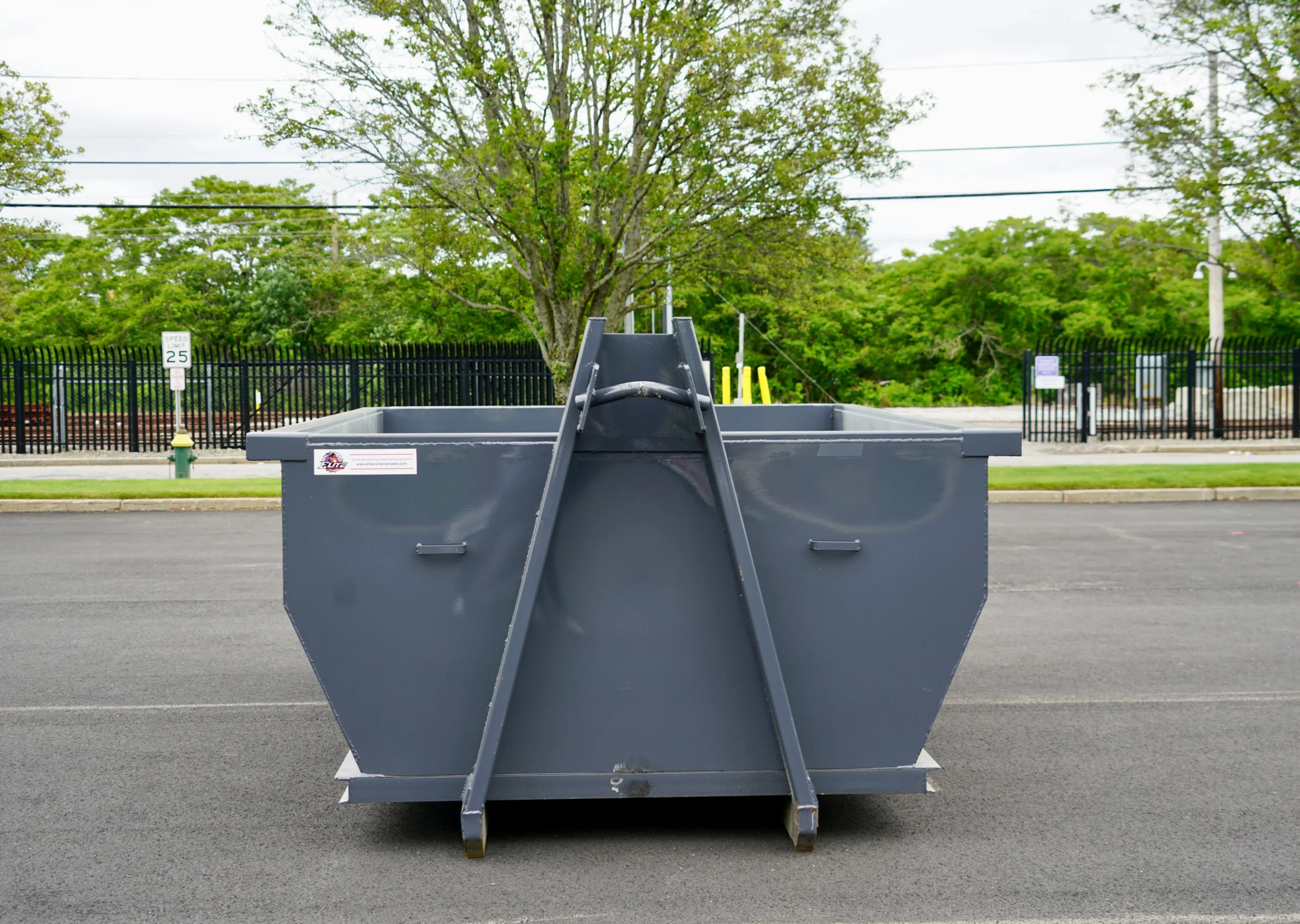
What common debris actually weighs
Planning figures only, and every one of them moves with moisture, compaction and how much air is trapped in the pile. The right column answers the question that matters on a jobsite: how far up the walls you get before a 20 yard reaches its 2 tons.
| Material | Pounds per cubic yard | Cubic yards to reach 2 tons |
|---|---|---|
| Furniture, boxes and bagged waste | 150 to 250 | Volume runs out first |
| Framing lumber and clean wood | 300 to 400 | About 11 |
| Mixed construction debris | 350 to 500 | About 9 |
| Drywall and plaster | 400 to 500 | About 9 |
| Asphalt shingle tear-off | 400 to 500 | About 9 |
| Dry excavated soil | About 2,000 | About 2 |
| Broken masonry and brick | About 2,400 | Under 2 |
| Saturated turf and wet fill | 2,200 to 2,600 | Under 2 |
The last three rows are the argument for a separate box rather than a larger one. Nothing in that group is permitted in a standard container at any depth, and the alternative is the dedicated concrete and dirt container, rated at three times the weight for the same footprint.
Three ways a load goes wrong, in order of how often we see it
First, density gets misread. Someone books by how big the pile looks and the pile turns out to be plaster. Second, the load goes above the rail, which stops it being sheeted, and sheeting is a legal condition of the truck moving at all. Third, and rarest, the box is inside its own allowance but the truck is not: a tractor carries a separate axle rating that has nothing to do with the container, and a driver who cannot lift legally will not lift at all. Naming the material at booking removes all three.
- Cubic yard
- A cube three feet on every side, which is 27 cubic feet. Container sizes are named in these, so a 20 yard is 20 of those cubes of space.
- Square
- Roofing measure, 100 square feet of roof surface. Single-layer asphalt runs roughly 250 pounds a square, so squares convert to tons quickly.
- The 200 pound ratio
- Included tonnage divided by container volume. Identical on all three standard sizes. The heavy container returns 600.
- Tare and net
- A facility scale weighs the loaded truck, then the empty truck. The difference is your net weight, and it is the figure the invoice uses.
- Axle rating
- A legal limit belonging to the truck, not the box. It is why an overweight container is refused in the driveway rather than at the gate.
Questions
Frequently Asked Questions
How many pickup truck loads fit in each size?
Figure on roughly three pickup loads to a 10 yard, four or five to a 15, and six or seven to a 20. That is a volume comparison only, and it holds for light bulky waste. Dense material reaches the tonnage well before it reaches that many loads, so use the count to picture the space and use the included tons to pick the size.
Can I mix concrete, dirt or sod in with regular debris?
No. Those materials go in a separate box on separate terms, and a blended load gets turned away at the gate rather than sorted for you. Order the dedicated container, rated for 3 tons on a 3 days rental, and flag it at booking when one job produces both kinds of waste.
How high can I load the dumpster?
Level with the top rail, and no higher. Anything mounded above it stops the load being sheeted, which is a legal requirement before the truck moves, so a driver arriving to an overfilled box waits while it comes down. A flat load also spreads the weight evenly, and that matters far more on dense material than on light.
What is included in the rental?
Delivery, pickup, disposal up to the included tonnage for your size, and 7 days on site. The heavy material container runs on a 3 days rental instead. Extra days are available on both, and anything over the included tonnage is billed per ton at the rate on your agreement.