How to Load a Dumpster the Right Way: A Step-by-Step Guide for Rhode Island Homeowners
The dumpster is almost full. Pickup is scheduled for tomorrow. Then comes the question: did everything get loaded correctly? It sounds minor, but how to load a dumpster properly is one of the most overlooked parts of any cleanup or renovation project. Load it the wrong way and the results can mean overage fees, a rejected load, or a cracked driveway.
In Rhode Island, where older homes, tight driveways, and mixed debris types are common, loading technique matters more than most renters expect. The right approach is not complicated, but it does require a plan before the first item goes in.
This guide breaks down the loading process step by step, covers what cannot go in a standard roll-off dumpster in RI, and explains how to protect your property from the moment of delivery to pickup.
Why Loading Order Matters More Than Most People Think
Most people treat a dumpster like a giant trash can: toss things in, fill it up, and call for pickup. That approach works until it does not. A poorly loaded dumpster creates real problems at multiple points: during the rental, at pickup, and after the truck drives away.
Three things go wrong when loading order is ignored:
• Top-heavy loads shift during transport, creating a safety hazard and potentially voiding the rental agreement.
• Overfilled bins get rejected at pickup or trigger overage fees that can exceed the original rental cost.
• Wrong weight distribution concentrates pressure on specific driveway points, which is how a loaded dumpster cracks asphalt or settles into a soft surface.
Getting the loading sequence right from the start costs nothing extra and prevents all three of these outcomes.
Step 1: Start With the Heaviest Items First
The base layer of any well-loaded dumpster should be the heaviest, flattest debris available. This does two things: it lowers the center of gravity for transport stability, and it creates a solid foundation that lighter material can stack and compress against.
Flat, Dense Items Go on the Bottom
Flat pieces pack tighter and leave fewer air pockets than irregular shapes. A section of plywood dropped flat across the container floor creates a stable base for everything above it. Irregular items like broken furniture legs or random scraps should never form the base layer: they shift, create gaps, and allow lighter material to fall through and compact unevenly.
Keep Concrete and Dirt Out of General Dumpsters
This is one of the most important loading rules for Rhode Island homeowners. Concrete, brick, cinder block, and excavated dirt are extremely dense. A single cubic yard of concrete weighs roughly two tons, which means a small pile of demolition rubble can exceed a standard dumpster's weight limit before the container is even a quarter full.
Mixing heavy masonry with general debris does not spread the weight; it just pushes the total load over the limit.
Most providers, including PVD, offer a dedicated concrete and dirt disposal service specifically for this material. Using the right container for heavy debris avoids overage charges and ensures proper disposal.
For details on concrete, brick, asphalt, and excavated soil removal, see the separate concrete and dirt disposal service page.
Step 2: Fill Gaps With Medium and Lightweight Debris
Once the heavy base layer is in place, the goal shifts to filling every gap efficiently. Air pockets are wasted space, and wasted space means paying for container volume that is not actually being used. This is where methodical loading pays off.
Key strategies for this phase:
• Break down cardboard boxes completely before loading. Flat cardboard slides into gaps that no bulky box could reach and compresses well under weight.
• Nest smaller items inside larger ones where possible. Buckets, bins, and open-top containers should go in stacked or nested, not tossed in separately.
• Distribute weight evenly from side to side rather than piling everything toward one end. An uneven load is harder to transport safely and concentrates pressure on one corner of the driveway.
• Layer lighter material over heavier material in a roughly ascending density sequence. Loose debris like insulation, packaging, and small scraps fill in last.
The test for this phase is simple: if there are large open gaps visible from above with no structural reason for them, the load has room to be packed more efficiently before moving to the next step.
Step 3: Do Not Exceed the Fill Line
Every roll-off dumpster has a fill line, typically marked on the inside of the container walls. That line is not a suggestion. Exceeding it creates problems that range from an extra charge to a complete pickup refusal.
A few things to understand about the fill line:
• Fill lines exist for transport safety, not just capacity. An overloaded container shifts under braking and can create a road hazard. Drivers are legally required to refuse or return loads that exceed the fill line.
• Overage fees are charged per ton over the included weight limit, and the math adds up fast. One ton of overage at a typical Rhode Island rate can cost $75 to $150 or more on top of the rental price.
• Tarps and straps are not a workaround. Covering debris that exceeds the fill line does not make the load compliant. The issue is weight and safety, not visibility.
If the container reaches the fill line before the project is finished, the right call is to schedule an additional pull rather than try to compact the debris further with weight or force. A second pull is almost always cheaper than an overage fee plus a rejected load fee combined.
What You Cannot Put in a Rhode Island Roll-Off Dumpster
Rhode Island has specific restrictions on what can go into a standard roll-off container. Most of these align with state and federal environmental regulations. Putting prohibited items in a dumpster can result in the load being rejected, additional disposal fees, or fines passed back to the renter.
The Rhode Island DEM waste management guidelines provide the regulatory framework for what is considered acceptable versus hazardous or restricted material. The most common prohibited categories include:
• Hazardous materials: paint (liquid), solvents, adhesives, cleaning chemicals, and pesticides. Dried latex paint in small amounts may be acceptable with some providers; confirm before loading.
• Tires: prohibited by most RI dumpster companies and restricted under Rhode Island solid waste rules.
• Electronics and e-waste: televisions, monitors, computers, and similar devices require separate handling. Rhode Island has designated electronics recycling programs.
• Medical waste: sharps, medications, and clinical waste require licensed medical waste disposal.
• Propane tanks and flammables: any pressurized container or flammable liquid is a transport and disposal hazard.
• Refrigerants: refrigerators and air conditioning units contain refrigerant that must be recovered by a certified technician before the appliance can be placed in a standard dumpster.
For a broader reference on what belongs in a roll-off container, the EPA hazardous waste basics page provides clear guidance on hazardous versus non-hazardous classification. Additional information on common items allowed in roll-off dumpsters is available through general home improvement resources.
How to Protect Your Driveway During a Dumpster Rental
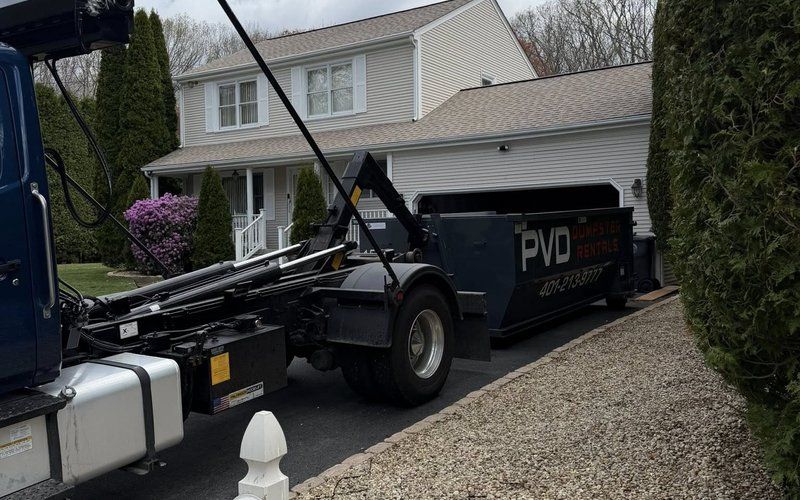
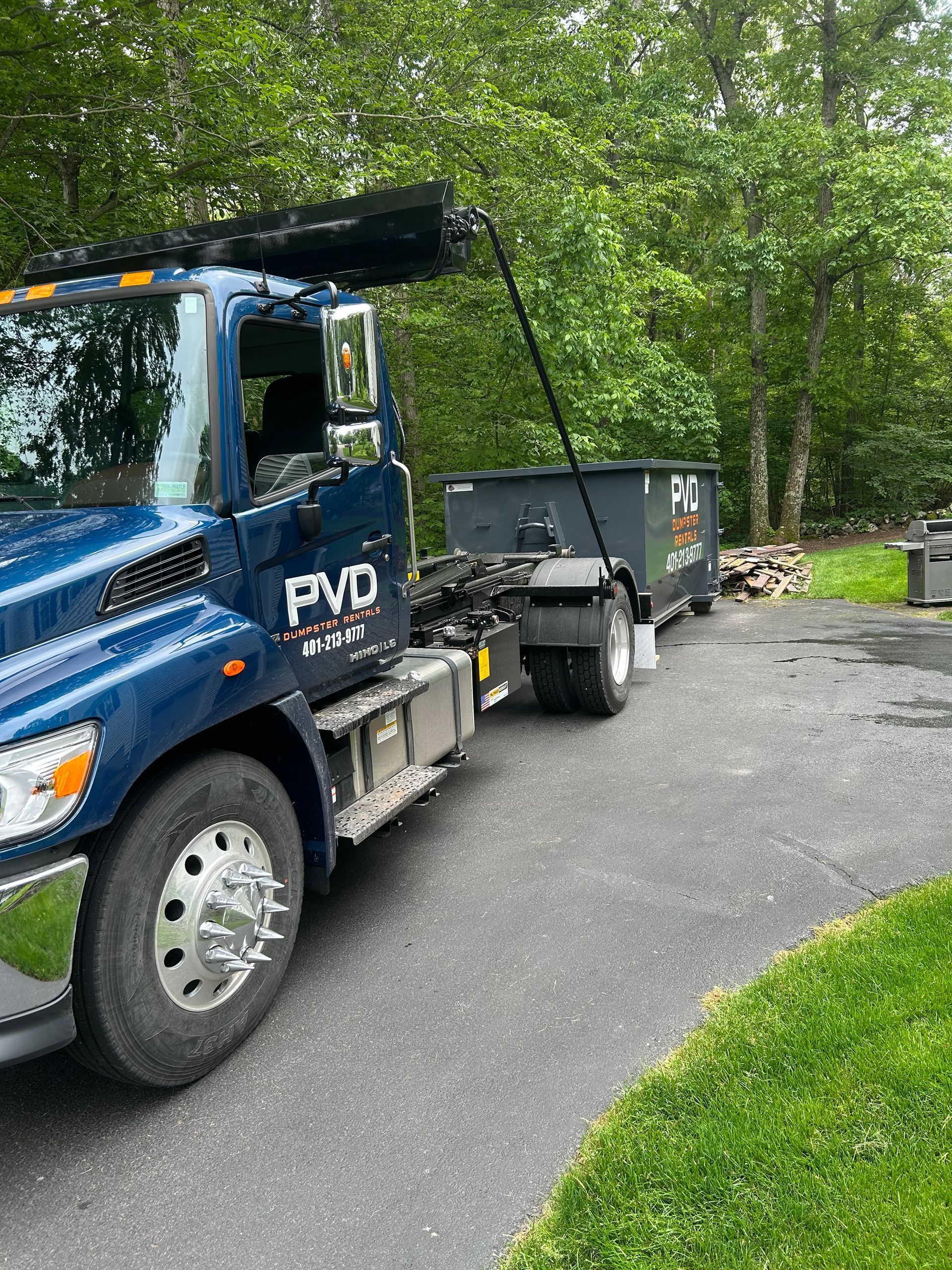
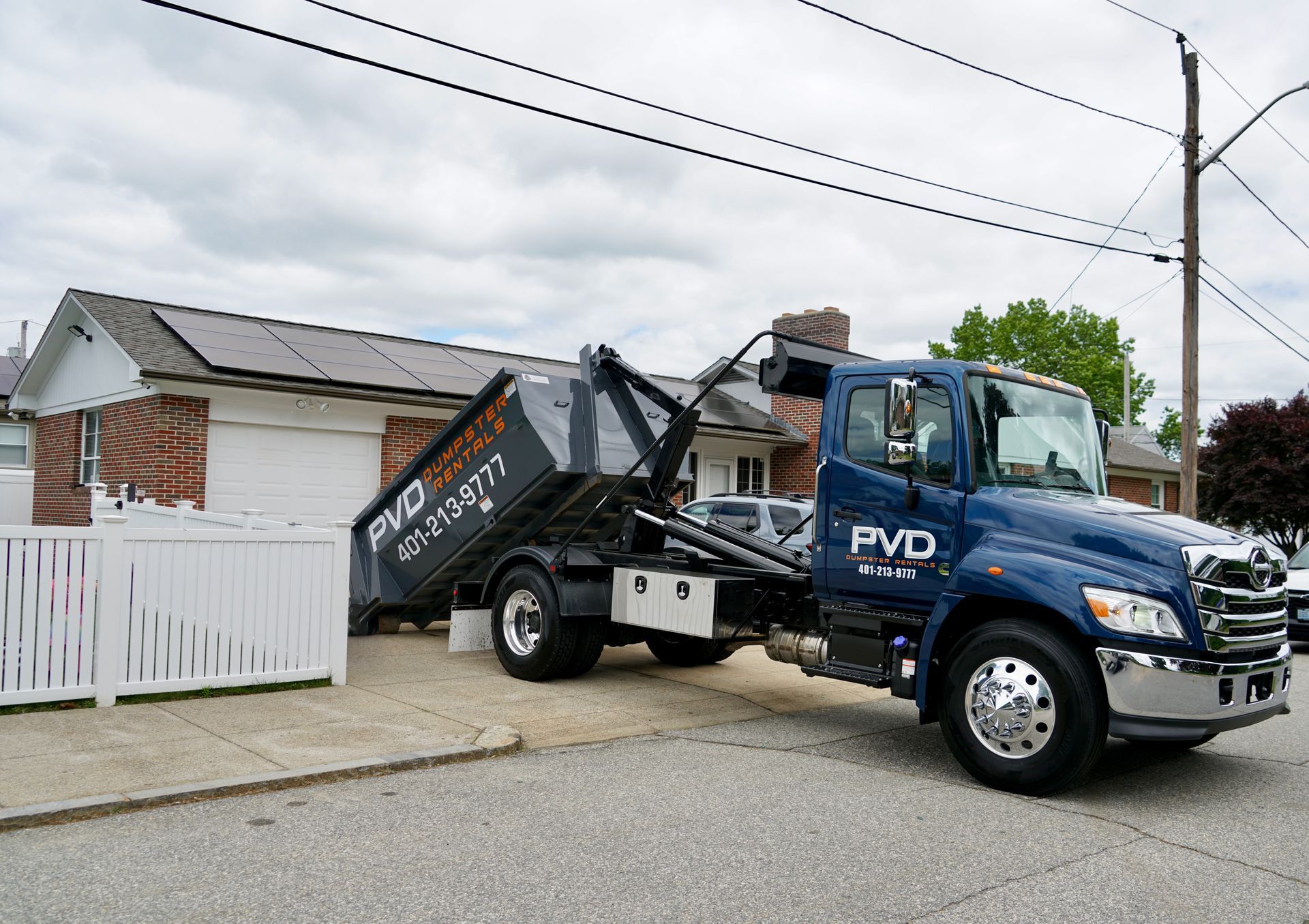
A loaded dumpster weighs several tons. Rhode Island driveways, particularly those on older residential properties, vary widely in condition. The combination of a heavy container and an already-stressed surface can result in cracking, settling, or surface scarring.
Three steps reduce that risk significantly:
• Request plywood boards or rubber mats at the time of booking. These distribute the container's weight across a larger surface area, reducing the point load on any single spot. Most rental companies either provide these or can arrange them.
• Position the container on a flat, paved surface wherever possible. Asphalt is more vulnerable than concrete, but both benefit from weight distribution boards under the wheels.
• Avoid grass, soft ground, or recently saturated soil. Wet or soft surfaces under a full dumpster create settling risk and can leave permanent ruts or depressions.
If the only available placement location is on a public street, a permit from the local municipality is required before delivery. Requirements vary by city; Cranston, Providence, and Warwick each have their own permit process. The dumpster rental in Cranston service page includes local information for Cranston projects.
Frequently Asked Questions About Loading a Dumpster
Can I put shingles and roofing material in a standard dumpster?
Yes, but with an important caveat: shingles are dense and heavy. A standard 10-yard dumpster loaded with shingles only will typically approach its weight limit before it reaches its volume limit. For a small roof, a 10-yard container works well if shingles are the only material. For larger roofs or if other debris is being mixed in, a 15-yard container is usually the better choice. Confirm weight limits with the provider before booking a roofing project.
What size dumpster do I need for a full house cleanout?
For most full house cleanouts in Rhode Island, a 15-yard or 20-yard container is the right range. A single-level home with a standard amount of furniture, appliances, and household goods typically fits a 15-yard. A larger home, a home with a full basement and garage, or a property that has accumulated significant debris over many years usually requires a 20-yard. The dumpster sizes available from PVD page outlines what each size handles in detail.
How do I know if my load is over the weight limit?
Weight limits are harder to estimate by eye than volume limits, but material type is the most useful guide. Light debris like furniture, household goods, and wood framing rarely causes weight problems. Dense material like concrete, tile, soil, and appliances adds up quickly. A good rule of thumb: if the load is more than half heavy material by volume, it is worth calling the provider to confirm the load will stay within the included tonnage. PVD Dumpster Rental can advise on weight estimates at the time of booking.
Loading a dumpster correctly comes down to three core steps: start heavy and flat, fill gaps efficiently, and stay below the fill line. Follow those three steps and the most common dumpster rental problems, overage fees, rejected loads, and driveway damage, become far less likely.
Knowing what cannot go in a Rhode Island roll-off, and using a dedicated container for heavy materials like concrete and dirt, keeps the project compliant and on budget. The difference between a smooth pickup and a costly rejection almost always comes down to decisions made while loading, not after.
For same-day dumpster delivery anywhere in Rhode Island or Southeast Massachusetts, call
PVD Dumpster Rental at
(401) 213-9777 or book online on our website. If there are questions about load weight, container size, or prohibited items, the team is available to help before delivery and throughout the rental period.